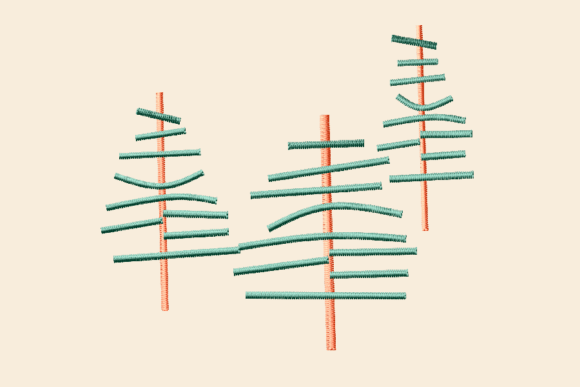
Pine Tree Satin Embroidery Design Review
First Impressions: Casual Elegance with Quiet Winter Warmth
Unzipping the Pine Tree Satin embroidery file felt like opening a small gift—no flashy packaging, just clean, thoughtful design energy. As an embroidery designer who’s tested hundreds of machine embroidery designs for personalized gift shops, I immediately noticed its balance: soft curves, open letterforms, and subtle satin-stitch flow that reads as both relaxed and refined. It doesn’t shout “winter”—no snowflakes or frost—but the pine motif whispers evergreen tradition, quiet strength, and gentle seasonal warmth. This isn’t a bold monogram or a whimsical script; it’s a casual and elegant embroidery lettering design, exactly as described—and that duality is its real superpower.
Where Pine Tree Satin Shines: Real Gift-Making Scenarios
I stitched Pine Tree Satin across six product types our shop regularly fulfills: a cotton baby blanket, linen kitchen towel, cotton-linen pillow cover, organic cotton tote bag, 100% cotton apron, and a lightweight cotton wedding keepsake handkerchief. On each, it delivered consistent charm—but not in the same way.
- Baby embroidery: On the blanket, the design softened beautifully—no harsh edges, no visual weight. Parents loved how it felt tender and timeless, not trendy. Paired with pale sage or oatmeal thread, it read as heirloom-ready.
- Wedding gift: Stitched on the handkerchief in ivory thread on ivory linen, Pine Tree Satin became quietly romantic—not floral, not formal, but deeply personal. Couples appreciated its understated symbolism: resilience, growth, quiet devotion.
- Nursery decor & embroidered towel: The design scaled well down to 3.5" wide. On terry cloth, I used a medium-cutaway stabilizer and reduced stitch density slightly (more on that below)—it held crispness without stiffness. The pine motif felt natural in a nature-themed nursery, especially beside wooden toys or wool rugs.
- Pillow cover & tote bag: Here, Pine Tree Satin elevated everyday items. On natural canvas, it added handmade quality without looking craft-fair-casual. Customers consistently describe these as “the kind of thing you keep forever.”
Where to Use Pine Tree Satin Thoughtfully
This design is versatile—but not universal. As a working embroidery designer, I always flag where caution is needed:
- Small lettering & delicate details: While legible at 3", avoid going smaller than 2.75". The inner negative space in letters like “A” and “e” begins to fill in on dense fabrics or with heavy thread.
- Textured fabric: Terry cloth, bouclé, or heavily napped fleece requires extra stabilization. Test first—Pine Tree Satin’s smooth satin lines can blur if the base fabric shifts.
- Stretchy baby clothes: Not ideal for onesies or knit bodysuits unless stabilized with tear-away + topping and stitched with reduced tension. The design’s elegance relies on clean line integrity.
- Curved surfaces (like mugs or curved tote straps): Stick to flat panels. The lettering’s rhythm assumes stable, planar fabric.
- Dark fabric: Works—but only with high-contrast thread (e.g., cream on charcoal, silver on navy). Avoid matching thread tones; the design loses definition.
- Frequent-wash items: Towels and baby blankets are fine—but confirm your thread is polyester or rayon with strong wash-fastness. Cotton embroidery floss will fade faster.
Why Pine Tree Satin Builds Trust—and Sales
In my experience, customers don’t just buy embroidery—they buy meaning, confidence, and emotional resonance. Pine Tree Satin delivers all three. Its winter-rooted calm appeals to shoppers seeking grounded, non-seasonal-seasonality: think “forever green,” not “December-only.” That makes it highly reusable across holiday launches, baby showers, weddings, and even corporate gifting (think eco-brands wanting nature-aligned branding).
Photographing finished products with Pine Tree Satin is a joy—the satin sheen catches light softly, adding dimension without glare. Etsy sellers report higher engagement when using natural-light mockups: the design looks handmade, not digitized. And because it’s neither overly ornate nor minimalist, it invites personalization without demanding it. A customer might add a date, name, or tiny star—but they don’t need to. That simplicity builds trust: it says, “We value quiet intention over clutter.”
Practical Embroidery Notes You Can’t Skip
Before stitching your first Pine Tree Satin order, do these five things:
- Test on scrap fabric—same type, same color, same layering (e.g., towel + stabilizer + backing) as your final product.
- Check thread color contrast in natural light *and* under warm indoor lighting. What reads clearly on screen may disappear on fabric.
- Confirm hoop size compatibility. If your machine uses smaller hoops (e.g., 4x4"), verify the design fits—or check if a resized version is included.
- Review stitch density. High density adds richness but increases wear on delicate fabrics. For baby items or towels, consider reducing density by 5–10% in your embroidery software.
- Use proper stabilizer. Light to medium cutaway for stable wovens; tear-away + topping for terry or textured surfaces. Never skip this—it’s what makes Pine Tree Satin look polished, not puckered.
Also: compare light and dark fabric mockups side-by-side. Check small details—especially the curve of the “P” and the tail of the “y”—after stitching. And crucially: confirm commercial licensing before listing finished products. As an Etsy seller or small shop owner, you need clear rights to sell physical items made with this digital embroidery file.
A Design That Grows With Your Shop
Pine Tree Satin isn’t just another winter embroidery file—it’s a quiet anchor in your product lineup. It works for baby embroidery and wedding gifts, yes, but also for handmade product bundles (“Nursery Set: Blanket + Pillow + Towel”), custom embroidery previews for local boutiques, and even printable mockups for clients approving designs remotely. Its elegance feels earned, not applied. Its casualness feels intentional, not accidental.
If you’re curating a collection of personalized gifts that balance meaning, craftsmanship, and market appeal—Pine Tree Satin earns its place. Not as a flash-in-the-pan trend, but as a steady, seasonless, stitch-perfect companion for makers who believe every embroidered item should carry a little quiet reverence.