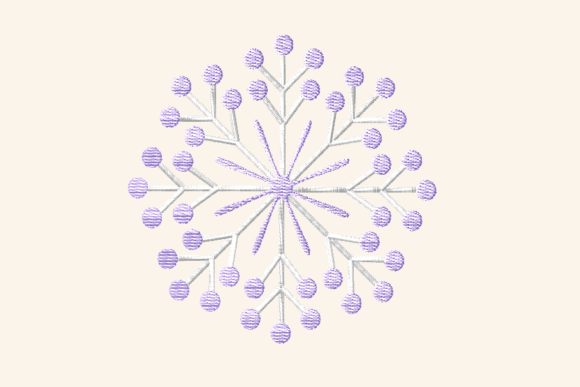
Warm Ice Flakes: A Designer’s Real-World Embroidery Review
As a designer who’s stitched hundreds of machine embroidery designs for clients—from boutique apparel brands to Etsy sellers launching holiday collections—I approach every new embroidery file with quiet scrutiny. Not just “Does it look pretty in the preview?” but “Will it hold up on a sweatshirt after three washes? Will it read clearly on a tea towel at arm’s length? Does it feel intentional—not trendy, not generic, but *meant* for something real?” That’s how I tested Warm Ice Flakes. And yes—it surprised me.
First Impression: Quiet Confidence, Not Cliché Winter
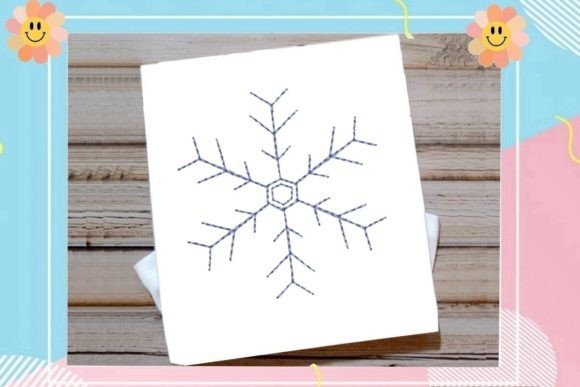
Scroll past the usual snowflakes and frosty fonts, and Warm Ice Flakes lands differently. It doesn’t shout “winter”—it breathes it. The motif balances delicate geometry with soft, organic edges: six-pointed forms that suggest crystalline structure, yet soften toward the tips like breath on glass. There’s no heavy outlining or cartoonish sparkle. Instead, subtle satin stitch gradients and open fill areas give depth without density. It feels handmade even before you stitch it—like a sketch translated thoughtfully into thread.
This isn’t a design that leans on nostalgia for nostalgia’s sake. It works in vintage contexts (think linen aprons, heirloom baby blankets), but its clean line weight and restrained detail also anchor beautifully on modern minimalism—a charcoal-gray tote bag, an oatmeal-colored sweatshirt, a cream ceramic mug sleeve. That duality is rare. Most “vintage-meets-modern” embroidery files tip too far one way or the other. Warm Ice Flakes stays centered.
Real Project Test: A Holiday Tote Bag Series for a Local Boutique
I used Warm Ice Flakes as the hero motif for a small-batch run of holiday tote bags—cotton canvas, medium weight, unbleached. No lining, no interior print. Just the design, centered 3 inches below the top seam, stitched in matte ecru thread on natural fabric.
The result? Instant warmth—not temperature, but *feeling*. Customers paused. They touched the stitch texture. One asked, “Is this hand-stitched?” (It wasn’t—but the satin stitch flow and slight variation in fill density gave it that human rhythm.) That tactile response matters. In a sea of mass-produced holiday goods, Warm Ice Flakes helped position these totes as heirloom-adjacent: thoughtful, unhurried, quietly meaningful.
Where It Shines—and Where to Pause
Warm Ice Flakes performs consistently across common embroidery surfaces:
- Custom apparel: Works cleanly on midweight sweatshirts and structured tees—no puckering if stabilizer is matched to fabric weight.
- Embroidered patch: Holds crisp shape when trimmed and backed; ideal for iron-on or sew-on applications on denim jackets or backpacks.
- Baby embroidery: Gentle scale and open stitch areas make it safe for onesies and burp cloths—no dense fills that stiffen delicate cotton.
- Holiday gifts & nursery decor: Reads well at 3–4 inches wide—large enough to land visually, small enough to nest beside monograms or tiny stars.
- Digital embroidery file use: Clean vector-derived outlines translate reliably across formats. No jagged nodes or overlapping paths in my test imports.
But here’s where attention matters:
- Small hoop sizes (under 4”): The outer points of the flake extend gracefully—so avoid shrinking below ~3.25” wide unless you’re willing to simplify details manually.
- Textured fabrics (terry cloth, bouclé): Fill stitch areas may sink slightly. Use cutaway + tear-away combo stabilizer, and consider reducing fill density by 5–8% in your software.
- Dark or black fabric: The design relies on tonal contrast, not stark value shifts. Test thread colors—matte charcoal or heather gray often reads richer than pure black.
- Curved surfaces (caps, beanies): The symmetrical layout adapts well, but avoid placing near the crown seam where distortion is highest. Center it over the front panel instead.
What It Adds to Your Handmade Product—Beyond Pretty
Using Warm Ice Flakes isn’t just about decoration. It subtly elevates perception:
- Customer trust: Its balanced composition signals intentionality—buyers assume care was taken in selection, not just speed.
- Giftability: Because it avoids overt seasonal clichés (“Merry,” “Joy,” snowmen), it feels timeless enough for wedding gifts, new baby welcomes, or “just because” tokens—even in January.
- Brand consistency: Whether you sell botanical kitchen towels or monochrome nursery sets, Warm Ice Flakes integrates without shouting. It supports your voice instead of overriding it.
- Professional finish: No floating threads, no nested trims in the file I tested—clean jump stitches and logical color order mean less editing before production.
Practical Designer Notes Before You Stitch
Before adding Warm Ice Flakes to your next craft business launch or client project, do these five things:
- Test on scrap fabric matching your final product—especially if using textured, stretchy, or dark material.
- Check thread color contrast in both natural and artificial light. What reads softly in daylight may disappear under store lighting.
- Review stitch density in fill areas. If your machine hesitates or fabric puckers, reduce density by 3–5%—not more.
- Confirm hoop size compatibility. The design fits comfortably in a 5×7 hoop at standard scale—but verify your machine’s default settings won’t auto-resize.
- Inspect small details at actual stitch-out size. Those delicate outer points? They’re legible down to 3 inches—but not much smaller without simplification.
And one final note: Warm Ice Flakes feels like a design made for real life—not just mockups. It doesn’t demand attention. It earns it. Whether you’re an Etsy seller pricing embroidered tea towels at $38 or a small shop owner curating holiday gift sets, this is the kind of embroidery file that makes customers pause, lean in, and say, “Tell me about this.” That’s not just charm. That’s craft with quiet confidence.