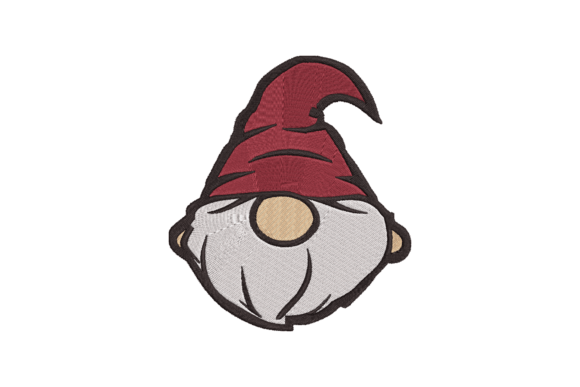
Santa Gnome Head
First Impression: Festive, Whimsical & Booth-Ready
As an embroidery designer who’s prepped over 200 craft fair booths in the past decade, my gut reaction to Santa Gnome Head is immediate and positive: it lands squarely in that sweet spot between nostalgic Christmas charm and modern handmade appeal. The name alone cues joy, approachability, and a touch of playful irony — perfect for shoppers scrolling Etsy or pausing at your market table. It doesn’t scream “traditional” or “minimalist.” Instead, it feels warmly rustic with a wink — think farmhouse kitchen meets holiday card whimsy. That duality makes it unusually versatile: equally at home on a linen tea towel and a denim tote bag.
Where Santa Gnome Head Shines on Craft Fair Products
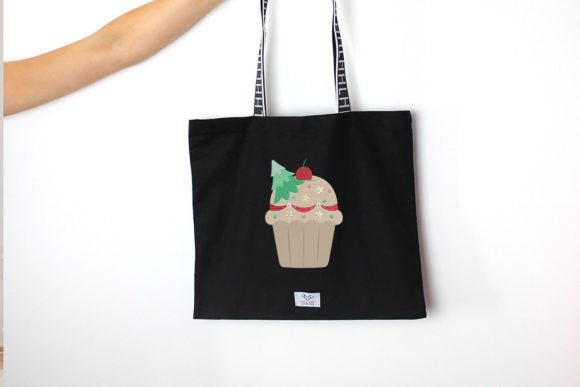
This design thrives where personality meets practicality. On tote bags, it reads clearly from six feet away — especially when centered on the front panel or scaled slightly larger near the bottom hem. As an apron embroidery, it adds instant character above the pocket without overwhelming the garment’s utility. For tea towel embroidery, its compact head shape avoids seam interference and complements classic flour-sack textures beautifully.
Embroidered patches are where Santa Gnome Head truly becomes a profit engine. Its self-contained silhouette — no sprawling branches or trailing elements — means clean cut edges, minimal fraying, and high repeatability across batches. Pair it with iron-on backing and you’ve got a low-risk, high-margin add-on for gift sets or seasonal bundles.
It also performs well on caps (front crown placement), small fabric pouches (centered on the flap or face), and pillow covers (corner accent or centered front). Avoid placing it on highly curved surfaces like baseball cap brims or deep gussets unless you’ve tested stitch behavior — curvature can distort facial features if stabilizer isn’t precisely matched.
What Makes It Sell — Beyond Cuteness
At a craft fair, attention spans are short and decisions are emotional. Santa Gnome Head wins because it’s instantly legible, emotionally resonant, and photographically strong. In your booth display, one well-stitched sample on a cream linen pillow cover or natural cotton apron draws eyes faster than intricate monograms or abstract motifs. Online, it converts: as a printable mockup for your Etsy listing, it looks premium and intentional — not clip-art-y or overused.
Crucially, it supports brand consistency. Whether you sell botanicals year-round or rotate seasonal collections, Santa Gnome Head fits seamlessly into a cohesive handmade aesthetic. It doesn’t clash with neutral palettes or overwhelm earthy tones — making it easy to maintain visual harmony across your small shop product lineup.
Production Realities: Speed, Clarity & Batch Confidence
This is a machine embroidery design built for efficiency. Its composition suggests moderate stitch density — enough detail to read as “gnome” (pointed hat, rosy cheeks, maybe a twinkle) but no micro-detailing that would bog down production or require specialty needles. That means faster run times, lower thread waste, and fewer mid-stitch stops during batch work.
It scales cleanly both up and down. At 3.5” wide, it’s a bold focal point on a market bag. At 1.75”, it’s a charming accent on a patch or pouch. That flexibility reduces inventory risk — one digital embroidery file serves multiple SKUs.
Photographing it for listings? Excellent contrast potential. Pair light thread on dark fabric (or vice versa), and its rounded, friendly shape pops with dimension. Just avoid overly busy backgrounds — let the handmade product breathe.
Careful-Use Notes Every Designer Should Check
- Dense stitch areas: If the beard or hat trim uses satin stitch fills, test on your target fabric — dense areas may pucker on lightweight cotton or stiffen textured towels.
- Tiny details: Gnome eyes or nose should remain legible at 2” width. If original files include sub-2mm elements, consider simplifying for dark fabrics or high-pile textiles.
- Dark fabric + light thread: Always verify thread contrast. A pale red hat won’t read on black denim without underlay or shadowing stitches.
- Curved surfaces: Caps and pouch gussets demand proper hooping tension and cutaway stabilizer — don’t assume standard tear-away will hold.
- Small sizes: Below 1.5”, facial expression may blur. Confirm clarity on scrap before committing to 50+ patches.
Designer-to-Designer Prep Checklist
- Test the embroidery file on scrap fabric matching your intended handmade product — same weight, weave, and dye lot.
- Check thread colors against your fabric swatches in natural light. What looks warm on screen may read cool in person.
- Review spacing and margins: Does the design clear seams, pockets, and hems on your chosen tote bag design or apron embroidery layout?
- Confirm hoop size compatibility with your machine and product dimensions — no last-minute re-hooping mid-fair.
- Inspect stitch density in software. If >12,000 stitches, factor in stabilizer cost and run time for commercial embroidery volume.
- Use appropriate stabilizer: cutaway for knits and caps, tear-away for stable wovens, fusible for lightweight linens.
- Create at least one real-world mockup — not just digital. How does it feel in hand? Does it drape right on your tea towel embroidery?
- Compare fabric colors side-by-side. A cream base versus oatmeal changes warmth perception dramatically.
- Verify commercial licensing before selling finished products — this is non-negotiable for Etsy sellers and boutique makers.
Final Thought: A Strategic Christmas Staple
Santa Gnome Head isn’t just another holiday motif — it’s a thoughtful, market-tested craft fair product asset. It balances charm with clarity, simplicity with character, and tradition with freshness. When placed intentionally — on a well-chosen fabric, with smart thread contrast and confident execution — it elevates your entire booth presence. It invites conversation, encourages photo-sharing, and quietly signals quality. For embroidery business owners building a repeatable, scalable Christmas collection, this embroidery design earns its spot in your core design assets. Just remember: great design only shines when paired with intentional making. Test, refine, and stitch with confidence.